
This article is updated as of 16/03/2026
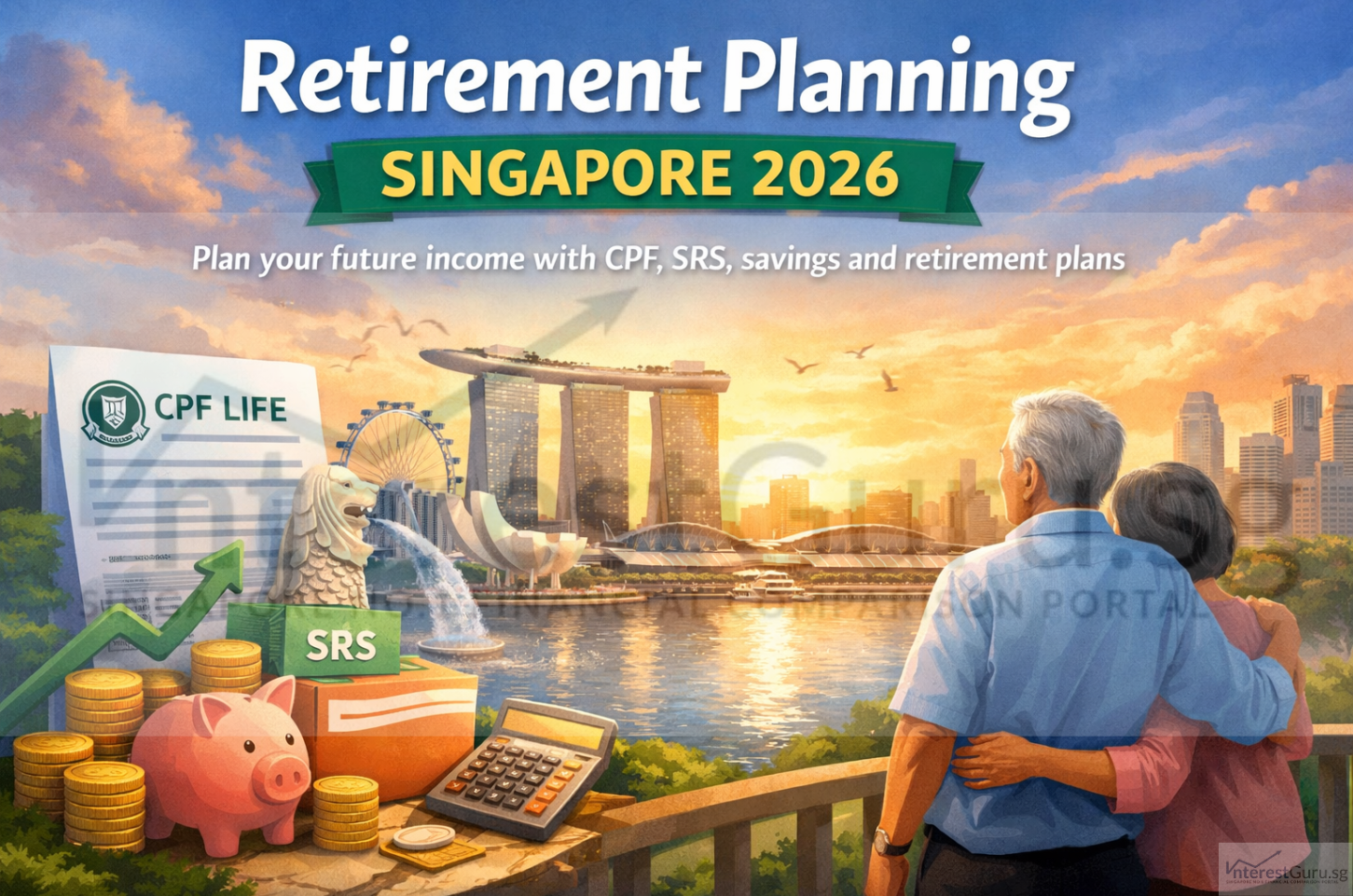
Retirement planning Singapore readers need in 2026 is no longer just about saving whatever is left at the end of the month. With longer lifespans, rising living costs, and changing retirement expectations, retirement planning in Singapore now means building a clear strategy using CPF LIFE, savings, SRS, investments, and sometimes private retirement plans.
If you have ever wondered whether CPF LIFE is enough, how much you may need to retire, or whether a retirement plan can help you build more reliable income, this guide will walk you through the key ideas in a practical and simple way.
Read also: 4 Best Retirement Plans in Singapore(Updated)
What is retirement planning in Singapore?
Retirement planning in Singapore means preparing enough future income and assets to support your lifestyle after you stop working full-time. For most people, this includes a mix of CPF savings, CPF LIFE payouts, personal savings, investments, Supplementary Retirement Scheme (SRS) funds, and in some cases, private retirement plans.
The goal is simple: when your salary stops, your income should not stop with it.
A common mistake is assuming CPF alone will automatically be enough. CPF is a strong foundation, but whether it fully covers your retirement depends on your lifestyle, housing situation, healthcare needs, and desired retirement age. CPF Board’s 2026 figures show that members who turn 55 in 2026 have a Basic Retirement Sum of $110,200 and a Full Retirement Sum of $220,400, with estimated monthly payouts from age 65 of about $950 and $1,780 respectively under CPF LIFE.
Why retirement planning in Singapore matters more today
Retirement can easily last 20 years or more. That means your money may need to support you for a very long time after you stop working. It is not just about reaching retirement age. It is about making sure your future income can keep up with your needs.
Inflation is another major reason retirement planning matters. CPF Board notes that payouts under the CPF LIFE Standard Plan are steady, but they do not increase over time, which means they do not fully protect you from inflation on their own. The CPF LIFE Escalating Plan starts lower but increases by 2% a year for life, which may help some members better manage rising costs over time.
There are also policy changes to be aware of. From 1 July 2026, Singapore’s retirement age rises to 64 and the re-employment age rises to 69 for the applicable birth cohorts. However, that does not change the common retirement planning question most people ask themselves: “Will I actually have enough income when I want to slow down or stop working?
Read about: When should you start saving for your retirement?
Read about: 3 things to consider before taking up a new financial product
The 4 building blocks of retirement planning in Singapore
A strong retirement plan is usually built from several layers rather than one single product.
1. CPF and CPF LIFE for retirement planning in Singapore
CPF is the starting point for most Singaporeans. At age 55, your Retirement Account is formed using savings from your CPF accounts, and those funds help support your future retirement payouts. From age 65, CPF LIFE provides monthly payouts for as long as you live, making it one of the core building blocks of retirement income in Singapore. CPF Board describes the Full Retirement Sum as an ideal point of reference for how much one needs in retirement.
CPF LIFE is valuable because it gives lifelong income, but many people still need more than a base payout if they want flexibility, travel, lifestyle spending, or extra protection against inflation.
2. Cash savings and emergency reserves for retirement
Before thinking only about long-term retirement products, it is important to maintain short-term liquidity too. Retirement planning works best when it sits on top of a stable financial base. That includes emergency savings, manageable debt, and the right insurance protection.
Without a proper financial foundation, even a good retirement strategy can feel stressful because you may keep dipping into long-term funds for short-term needs.
3. SRS for retirement planning in Singapore
The Supplementary Retirement Scheme (SRS) is a voluntary scheme that helps individuals save for retirement on top of CPF while enjoying tax relief. IRAS states that SRS contributions are eligible for tax relief, investment returns are tax-free before withdrawal, and only 50% of withdrawals are taxable at retirement. For Singapore Citizens and Permanent Residents, the annual SRS contribution cap is $15,300. IRAS also states that, on or after the applicable statutory retirement age, withdrawals can be spread across a 10-year withdrawal period, and a member with no other taxable income may be able to withdraw up to $40,000 a year tax-free during that period.
SRS can be especially useful for those in higher tax brackets, but it should still fit into your overall retirement strategy rather than being used purely for tax reasons.
4. Private retirement plans and investments in Singapore
Once you understand your CPF base and savings position, the next question is whether you need to create additional retirement income.
This is where private retirement plans, annuities, endowment-style plans, and investment portfolios may come in. Some people prefer the structure and discipline of a retirement plan. Others prefer the flexibility of investing. In reality, many people use a combination of both.
A private retirement plan may be useful if you want:
an extra income stream beyond CPF LIFE
more disciplined long-term saving
future payouts at a chosen age
more certainty in retirement cash flow
a way to supplement your retirement lifestyle rather than rely on one source alone
How much do you need for retirement planning in Singapore?
There is no single retirement number that suits everyone.
The amount you need depends on:
your expected monthly lifestyle expenses
whether your home is fully paid up
your healthcare needs
whether you plan to travel
whether you support family members
when you want to retire
how long you expect retirement to last
A simple way to start is with this formula:
Desired monthly retirement income – expected CPF LIFE payout = retirement income gap
For example:
Desired monthly retirement income: $3,500
Estimated CPF LIFE payout: $1,780
Income gap: $1,720 per month
That gap may need to be filled by savings, SRS withdrawals, investments, private retirement plans, rental income, or other assets.
This is why retirement planning in Singapore should be based on income planning, not just asset accumulation. What matters is not only how much money you have, but whether it can produce enough income to support your life after work.
Is CPF LIFE enough for retirement planning in Singapore?
For some Singaporeans, CPF LIFE may be enough if their retirement lifestyle is simple, their housing costs are low, and they have limited financial obligations. For others, it may only cover basic expenses.
Using CPF Board’s 2026 reference figures, the estimated monthly payout from age 65 is about $950 at the Basic Retirement Sum and about $1,780 at the Full Retirement Sum. That can form a useful foundation, but many people will still need additional income if they want more than a basic lifestyle.
A better way to think about retirement is:
CPF LIFE for lifelong base income
Savings and SRS for flexibility
Investments or private retirement plans for additional income and lifestyle support
That layered approach is often more realistic than expecting one source to do everything.
What is the purpose of a retirement plan in Singapore?
The main purpose of a retirement plan is to help supplement your future retirement income.
Depending on the plan you choose, a retirement plan may help you:
accumulate funds in a disciplined way
receive payouts from a selected age
supplement CPF LIFE payouts
create more predictable cash flow in retirement
leave behind some value for dependants, depending on the product structure
The key is not to buy a retirement plan just because it sounds safe or appealing. It should fit your timeline, budget, income target, and overall financial situation.
The best retirement plan in Singapore is not the one with the most attractive brochure. It is the one that actually helps close your retirement income gap.
Common retirement planning mistakes in Singapore
Relying only on CPF without checking the gap
Many people assume CPF will be enough without working out their actual retirement expenses.
Starting too late
The later you start, the more difficult it may be to build the income you want without increasing contributions significantly.
Ignoring inflation
A payout that looks decent today may feel very different 10 or 20 years later. This matters especially for fixed-income retirement sources. CPF Board explicitly notes that the Standard Plan’s payouts do not increase over time.
Focusing only on returns and not income
A large portfolio looks good on paper, but retirement is about whether your money can support you month after month.
Buying products without a proper plan
A retirement plan should be chosen to solve a real need. Product-first planning often leads to mismatched expectations.
How to start retirement planning in Singapore
If you want to begin today, use this simple framework:
1. Estimate your monthly retirement expenses
Think about your future costs for housing, food, transport, healthcare, leisure, and family support.
2. Estimate your CPF LIFE payout
Review your CPF balances and use CPF projections as a starting point.
3. Calculate your retirement income gap
This shows how much additional income you may need beyond CPF LIFE.
4. Decide how to fill the gap
You may use a mix of:
cash savings
SRS
investments
private retirement plans
other passive income sources
5. Review your plan regularly
Your income, goals, expenses, and family commitments will change over time. Your retirement strategy should change with them.
Should you consider a private retirement plan?
You may want to consider a private retirement plan if:
you want more retirement income than CPF alone may provide
you prefer disciplined long-term saving
you want a future payout structure
you are looking for a supplement to CPF LIFE
you are not comfortable relying only on market-based investments
That does not mean everyone needs one. But if your calculations show a meaningful retirement income gap, then a retirement plan may be one of the tools worth considering.
Final thoughts on retirement planning Singapore
Retirement planning in Singapore works best when you treat it as a full system rather than a single product decision. CPF gives you a valuable foundation, but many people still need to build additional income through SRS, savings, investments, or private retirement plans.
The earlier you calculate your retirement income gap, the easier it becomes to take action. Whether you are in your 30s, 40s, or 50s, the important thing is to start planning intentionally instead of leaving retirement to chance.
If you are unsure how much you may need or which approach suits you best, the next step is simple: run your numbers, compare your options, and build a strategy that fits your life.
Want to plan your retirement income more clearly?
Compare and get your quotes today for your retirment plan
If you prefer a more personalised discussion, speak with us to explore options that match your age, budget, and retirement goals.
FAQ section
What is retirement planning in Singapore?
Retirement planning in Singapore is the process of building enough future income through CPF, CPF LIFE, SRS, savings, investments, and retirement plans so you can support your lifestyle after you stop working.
Is CPF LIFE enough for retirement?
CPF LIFE can provide a strong lifelong income foundation, but for many people it may not be enough on its own to support their full desired lifestyle.
How much do you need to retire in Singapore?
It depends on your lifestyle, retirement age, healthcare needs, and expected CPF LIFE payouts. A useful starting point is to calculate your monthly retirement income gap.
Should I use SRS for retirement planning?
SRS can be useful for long-term retirement savings and tax relief, especially for those in higher tax brackets, but it should fit your broader retirement plan.
Should I buy a private retirement plan in Singapore?
A private retirement plan may be useful if you want additional structured income beyond CPF LIFE, but it should match your goals, budget, and timeline.4
Contact Us!
Or Whatsapp us to let a licensed financial adviser work out a proposal at no cost to you.
All financial reviews and proposals provided are 100% free of charge. There will be no obligation to take up any proposed financial products or services in any way.
We compare quotations head to head on all leading insurers in Singapore
Our Partners

Our Partners